Marketing has changed dramatically over the past decade. Businesses today must engage customers across multiple channels—email, social media, websites, messaging apps, and more.
Managing all these touchpoints manually is nearly impossible.
That is where AI marketing automation comes in.
Understanding how AI marketing automation works can help businesses automate repetitive tasks, personalize marketing campaigns, and increase conversions without increasing workload.
In this guide, we will break down exactly how AI marketing automation works, the technologies behind it, and how businesses can use it to scale their marketing efforts.
What is AI Marketing Automation?
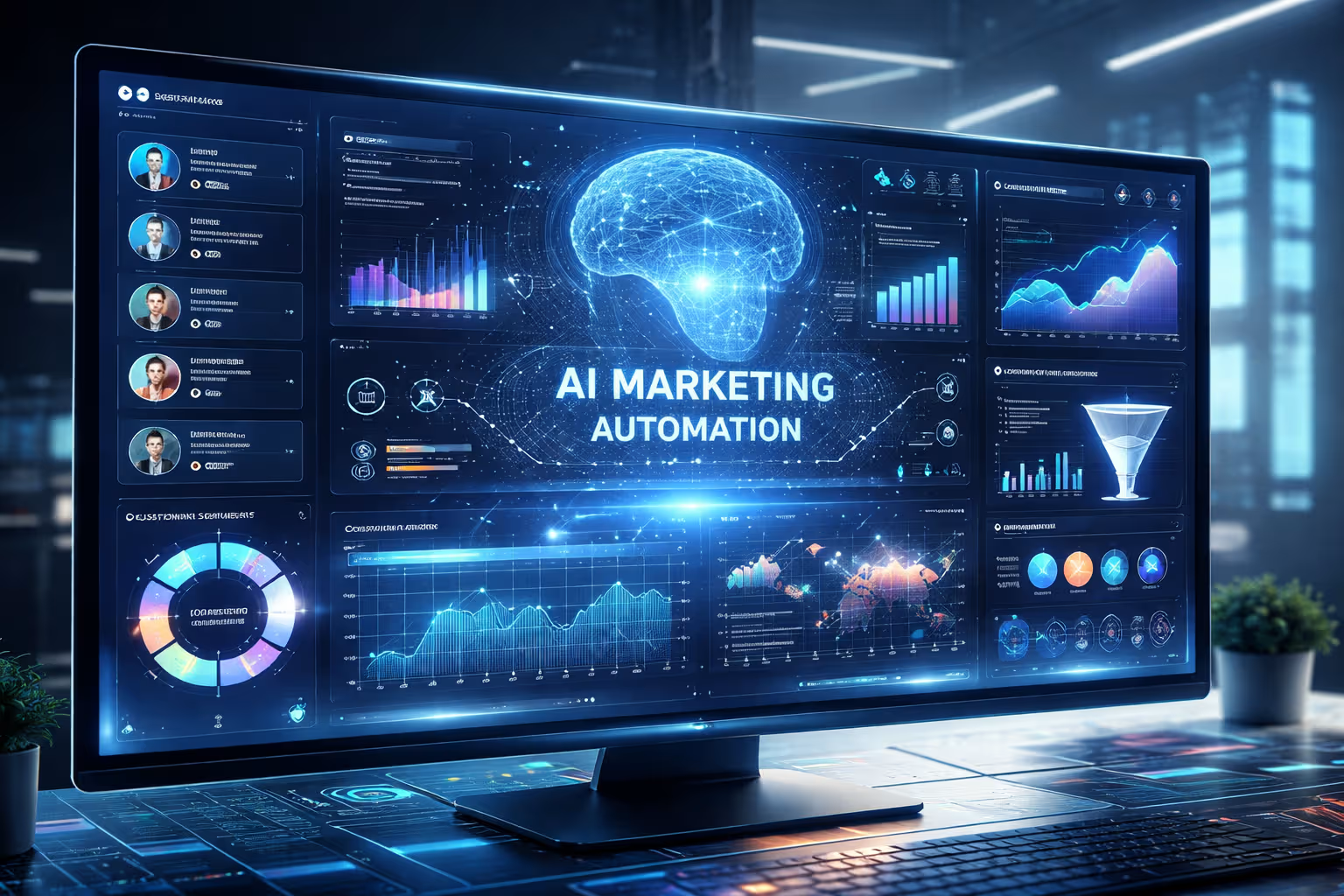
AI marketing automation combines artificial intelligence and marketing automation tools to streamline marketing processes.
Traditional marketing automation tools could schedule emails or manage simple workflows. However, AI takes automation to a completely new level.
AI systems can:
-
analyze large amounts of customer data
-
predict customer behavior
-
personalize campaigns automatically
-
optimize marketing strategies in real time
Instead of marketers manually creating every campaign, AI tools learn from data and automate the entire process.
Traditional Marketing Automation vs AI Automation
Traditional automation tools rely on fixed rules.
Example:
“If customer signs up → send welcome email.”
AI marketing automation works differently.
It analyzes customer behavior and decides what action should happen next.
Example:
AI might determine:
-
which product to recommend
-
when to send an email
-
what message will convert best
This makes marketing much more intelligent and effective.
Why AI Marketing Automation is Transforming Businesses
Businesses are rapidly adopting AI automation because it solves major marketing challenges.
Faster Marketing Decisions
AI analyzes millions of data points instantly.
Instead of spending weeks analyzing campaign results, AI tools can:
-
detect patterns
-
identify high-value customers
-
suggest improvements
This allows businesses to make smarter decisions faster.
Personalized Customer Experiences
Modern customers expect personalized experiences.
AI marketing automation can personalize:
-
email content
-
product recommendations
-
ads
-
website experiences
For example:
An AI system can show different homepage content to different users based on their browsing history.
Higher Conversion Rates
AI improves conversions by sending the right message to the right person at the right time.
Instead of generic campaigns, customers receive targeted offers tailored to their behavior.
This leads to:
-
higher engagement
-
better click-through rates
-
more sales
How AI Marketing Automation Works (Step-by-Step)
Now let’s break down exactly how AI marketing automation works in practice.
Step 1: Data Collection and Customer Tracking
AI marketing automation begins with data.
Systems collect customer data from multiple sources such as:
-
website visits
-
email interactions
-
social media activity
-
purchase history
-
chatbot conversations
This data forms the foundation for AI analysis.
The more data available, the more accurate AI predictions become.
Step 2: Customer Segmentation with AI
After collecting data, AI organizes customers into groups.
This process is called customer segmentation.
Instead of basic segmentation like:
-
age
-
location
-
gender
AI analyzes deeper behavior patterns like:
-
buying habits
-
browsing behavior
-
engagement frequency
For example:
AI may identify segments like:
-
high-intent buyers
-
repeat customers
-
inactive users
-
price-sensitive shoppers
Step 3: Predictive Analytics and Behavior Analysis
AI uses machine learning algorithms to predict future behavior.
It can predict:
-
which leads will convert
-
when customers are likely to purchase
-
which product someone might buy next
-
when customers may churn
This predictive capability allows businesses to target customers at the perfect moment.
Step 4: Automated Campaign Creation
Once AI understands customer behavior, it can automate campaigns.
AI marketing automation can automatically trigger:
-
email sequences
-
retargeting ads
-
SMS campaigns
-
chatbot conversations
For example:
If a visitor abandons their cart, AI can:
-
send a reminder email
-
offer a discount
-
show retargeting ads
All automatically.
Step 5: Real-Time Personalization
One of the most powerful features of AI marketing automation is real-time personalization.
AI can personalize content dynamically.
Examples include:
-
personalized product recommendations
-
dynamic email content
-
customized landing pages
Companies like Amazon and Netflix use AI personalization extensively.
Step 6: Continuous Optimization
AI systems continuously learn and improve.
They monitor campaign performance and automatically adjust strategies.
For example:
AI may test:
-
different subject lines
-
different ad creatives
-
different landing pages
Then automatically choose the best performing options.
This process is known as AI-powered optimization.
Key Technologies Behind AI Marketing Automation
Several advanced technologies power AI marketing automation.
Machine Learning
Machine learning allows AI systems to learn from historical data and improve predictions over time.
Natural Language Processing
NLP helps AI understand and generate human language.
This enables:
-
AI chatbots
-
automated content generation
-
sentiment analysis
Predictive Analytics
Predictive analytics analyzes past behavior to forecast future outcomes.
This helps marketers identify high-value leads.
AI Chatbots
AI chatbots automate customer conversations.
They can:
-
answer questions
-
recommend products
-
capture leads
-
guide customers through purchases
Real-World Examples of AI Marketing Automation
Businesses across industries are using AI automation to improve marketing performance.
AI Email Marketing Automation
AI tools analyze open rates and engagement patterns to send emails at optimal times.
They can also personalize subject lines and content automatically.
AI Lead Scoring Systems
AI assigns scores to leads based on their likelihood to convert.
This helps sales teams focus on the most promising prospects.
AI Customer Support Chatbots
AI chatbots provide instant customer support.
They can resolve common issues without human intervention.
Benefits of AI Marketing Automation for Businesses
Businesses adopting AI automation gain several advantages.
Major benefits include:
-
reduced manual work
-
improved campaign performance
-
deeper customer insights
-
better personalization
-
higher ROI
AI allows businesses to scale marketing efforts without expanding teams.
How Small Businesses Can Use AI Marketing Automation
AI marketing automation is not just for large companies.
Small businesses can use AI tools to:
-
automate email marketing
-
manage social media campaigns
-
generate leads automatically
-
personalize customer communication
Even simple automation workflows can dramatically improve marketing efficiency.
Best AI Marketing Automation Tools in 2026
Several platforms offer powerful AI marketing automation features.
Examples include:
-
HubSpot
-
ActiveCampaign
-
Salesforce Marketing Cloud
-
Mailchimp AI
-
SailoAI
These tools help businesses automate marketing processes while delivering personalized customer experiences.
Common Mistakes Businesses Make with AI Automation
Despite its benefits, businesses sometimes misuse AI marketing automation.
Common mistakes include:
-
relying on poor quality data
-
automating without strategy
-
ignoring personalization
-
over-automating communication
Successful AI marketing requires both technology and strategy.
Future of AI Marketing Automation
AI marketing automation will become even more powerful in the coming years.
Emerging trends include:
-
hyper-personalized marketing
-
predictive customer journeys
-
autonomous marketing campaigns
-
AI-generated marketing content
Businesses that adopt AI early will gain a major competitive advantage.
Conclusion
Understanding how AI marketing automation works is essential for businesses looking to scale their marketing efforts in 2026 and beyond.
AI allows businesses to automate repetitive tasks, personalize customer experiences, and optimize campaigns continuously.
As AI technology continues to evolve, marketing automation will become an essential tool for companies that want to stay competitive.
Businesses that embrace AI marketing automation today will be better positioned for the future of digital marketing.