If you’ve been hearing everyone talk about AI funnels but still feel confused, you’re not alone.
Most explanations are overloaded with technical jargon, complicated automation diagrams, and buzzwords that make the concept sound harder than it actually is.
But here’s the truth:
An AI sales funnel is simply a smarter version of a traditional sales funnel.
That’s it.
Instead of manually guiding every customer from “interested” to “buyer,” AI helps automate and optimize the process using data, personalization, and machine learning.
In this guide, we’ll break down the AI sales funnel explained in the simplest way possible — with real examples, clear steps, and practical insights you can actually use.
What Is an AI Sales Funnel?
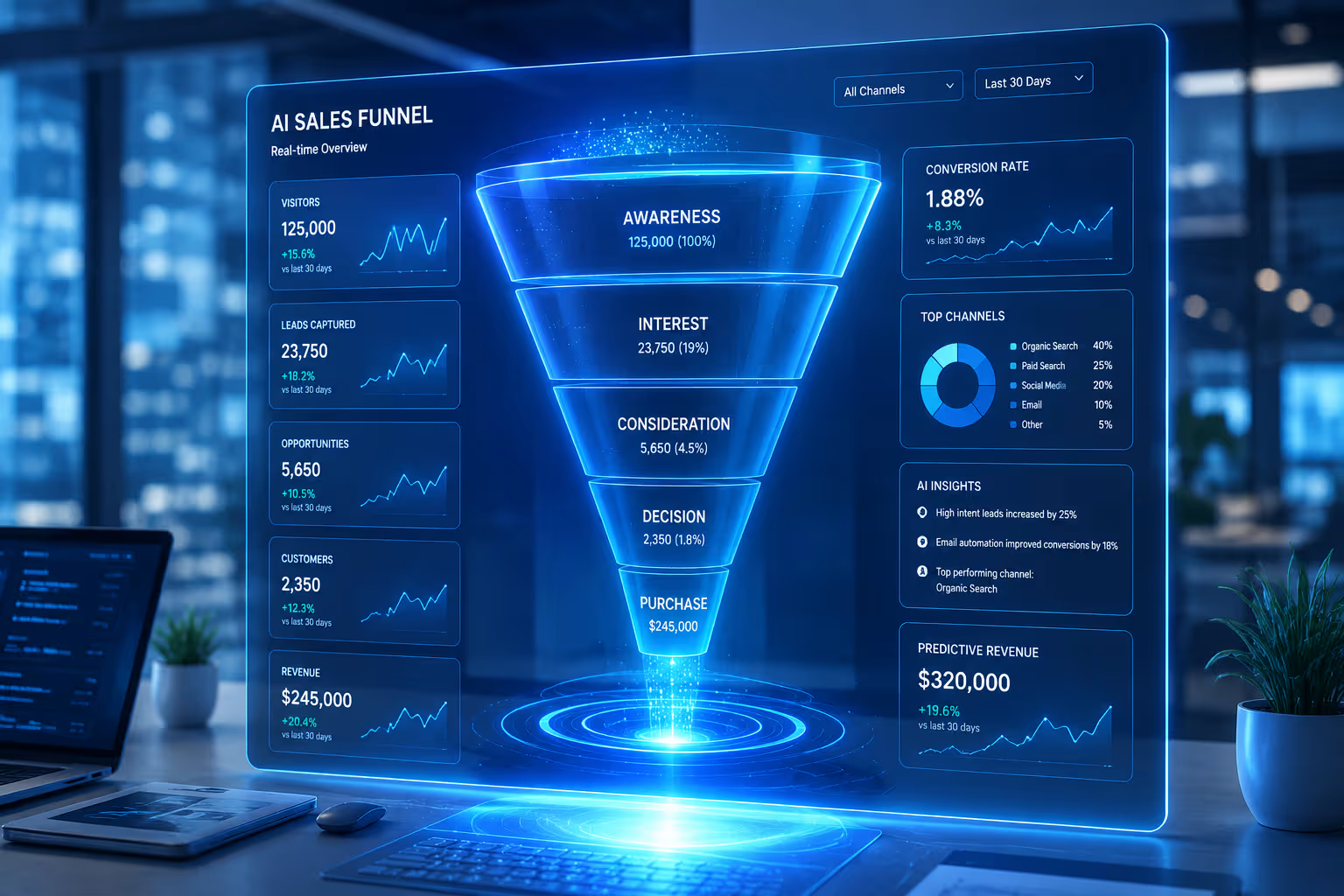
An AI sales funnel is a system that uses artificial intelligence to attract, qualify, nurture, and convert customers automatically.
Traditional sales funnels rely heavily on manual work:
- Sending emails manually
- Segmenting leads manually
- Following up manually
- Analyzing customer behavior manually
AI changes all of that.
Instead of humans doing repetitive tasks, AI tools:
- Analyze customer behavior
- Predict buying intent
- Personalize messaging
- Automate conversations
- Optimize conversions in real time
The result?
Businesses save time while increasing conversions.
Traditional Funnels vs AI Funnels
Here’s the simplest comparison.
| Traditional Funnel | AI Funnel |
|---|---|
| Same message for everyone | Personalized experiences |
| Manual follow-ups | Automated nurturing |
| Static customer journey | Adaptive customer journey |
| Limited data analysis | Real-time insights |
| Slower optimization | Continuous AI optimization |
Traditional funnels still work.
But AI funnels work faster, smarter, and at a much larger scale.
AI Sales Funnel Explained Step by Step
Let’s simplify how an AI funnel actually works.
Step 1: Attracting Visitors With AI
The funnel starts with traffic.
AI tools help businesses attract potential customers through:
- AI-generated ads
- Predictive audience targeting
- SEO optimization
- Smart social media recommendations
- AI content creation
For example, AI can analyze which type of audience is most likely to click your ads and automatically optimize campaigns toward those users.
Instead of guessing, AI uses data.
Step 2: AI Lead Qualification
Not every visitor is ready to buy.
AI helps identify high-quality leads automatically.
This process is called lead scoring.
AI analyzes:
- Website behavior
- Time spent on pages
- Email engagement
- Click patterns
- Purchase intent signals
Then it ranks leads based on conversion probability.
This means sales teams focus only on the hottest prospects.
Step 3: Personalized Follow-Ups
This is where AI becomes extremely powerful.
Traditional funnels send the same follow-up emails to everyone.
AI funnels personalize communication automatically.
For example:
- A visitor interested in pricing receives pricing-focused emails
- Someone reading educational blogs receives beginner content
- Returning visitors receive targeted offers
AI adapts messaging based on behavior.
This dramatically increases engagement.
Step 4: AI-Powered Conversion Optimization
AI continuously learns what works best.
It can optimize:
- Landing pages
- Headlines
- CTAs
- Email subject lines
- Ad creatives
- Product recommendations
Imagine having a marketing assistant testing thousands of variations automatically.
That’s essentially what AI optimization does.
Step 5: Retargeting and Upselling Automatically
Most buyers don’t convert immediately.
AI helps businesses stay connected through:
- Smart retargeting ads
- Personalized product recommendations
- Cart recovery emails
- Dynamic upselling campaigns
AI identifies the right message at the right time.
This keeps customers engaged even after leaving your website.
How AI Changes the Customer Journey
The biggest difference between traditional funnels and AI funnels is personalization.
AI makes the customer journey feel more human — even though it’s automated.
Real-Time Personalization
AI can instantly customize:
- Product suggestions
- Website content
- Offers
- Messaging
- Emails
Two visitors may see completely different experiences based on their interests.
This increases relevance and conversions.
Predictive Recommendations
Platforms like Netflix and Amazon already use predictive AI.
Businesses now use similar systems in sales funnels.
AI predicts:
- What users may buy next
- Which leads are most valuable
- When customers may leave
- Which offers perform best
This helps businesses act proactively instead of reactively.
24/7 Automated Conversations
AI chatbots and assistants can answer questions instantly.
Benefits include:
- Faster customer support
- Better lead qualification
- Reduced response times
- Higher conversion rates
Customers no longer wait hours for replies.
Real Examples of AI Sales Funnels
E-commerce Example
An online clothing store uses AI to:
- Recommend products
- Recover abandoned carts
- Send personalized discounts
- Predict customer preferences
The result:
Higher average order values and better retention.
SaaS Example
A software company uses AI to:
- Score leads automatically
- Personalize onboarding emails
- Recommend features based on usage
- Trigger sales calls for high-intent users
This improves trial-to-paid conversions.
Local Business Example
A local dental clinic uses AI chatbots to:
- Book appointments
- Answer FAQs
- Send reminders
- Follow up after visits
This reduces administrative work while improving customer experience.
Benefits of Using AI Sales Funnels
Higher Conversion Rates
Personalization increases engagement.
Relevant offers convert better than generic messaging.
Reduced Manual Work
AI automates repetitive tasks like:
- Email sequences
- Customer segmentation
- Lead qualification
- Reporting
This saves time and operational costs.
Better Customer Insights
AI provides valuable analytics about:
- Customer behavior
- Buying patterns
- Funnel drop-offs
- Campaign performance
Businesses make smarter decisions with real data.
Scalable Growth
Traditional funnels become difficult to manage at scale.
AI handles thousands of customer interactions simultaneously.
This makes growth more efficient.
Common Mistakes Businesses Make With AI Funnels
Over-Automating Too Early
Automation without strategy creates robotic experiences.
AI should improve human interaction — not completely replace it.
Ignoring Customer Intent
Many businesses automate everything without understanding what customers actually want.
Successful AI funnels focus on relevance first.
Using Too Many Tools
Businesses often stack dozens of AI platforms together.
This creates complexity instead of efficiency.
Start simple.
Best Tools for Building AI Funnels in 2026
Popular AI funnel tools include:
- HubSpot AI
- GoHighLevel
- ActiveCampaign
- ChatGPT integrations
- Salesforce Einstein
- ClickFunnels AI
- Jasper AI
The best tool depends on:
- Budget
- Business size
- Funnel complexity
- Marketing goals
How to Start Your First AI Funnel
You don’t need an enterprise budget to begin.
Start with these simple steps:
- Identify one repetitive marketing task
- Automate email follow-ups
- Add AI lead scoring
- Use chatbot support
- Track conversion improvements
Small optimizations compound quickly.
Final Thoughts: Why AI Funnels Are Becoming Essential
AI funnels are no longer a futuristic concept.
They’re quickly becoming the standard way businesses generate leads, nurture prospects, and increase conversions.
The reason so many people struggle to understand AI funnels is because marketers often overcomplicate them.
But the core idea is simple:
AI helps businesses deliver the right message to the right customer at the right time — automatically.
That’s the real power behind AI sales funnels.
And in 2026, businesses that adopt AI-driven automation early will likely outperform those still relying entirely on manual systems.