Artificial intelligence is changing the way businesses attract, nurture, and convert customers online. In 2026, AI funnels are no longer a futuristic marketing trend — they are becoming the standard way businesses automate growth.
But many people still ask one simple question:
How AI funnels work?
The answer is easier than most marketers make it sound.
An AI funnel is simply a smarter version of a traditional sales funnel. Instead of manually guiding every customer through the buying journey, artificial intelligence automates decisions, personalizes interactions, and predicts what users are likely to do next.
In this guide, we’ll break down exactly how AI funnels work in 2026 using simple language, real-world examples, and practical insights.
What Are AI Funnels?
An AI funnel is an automated marketing and sales system powered by artificial intelligence.
Its purpose is to:
- Attract visitors
- Understand user behavior
- Personalize communication
- Automate follow-ups
- Convert leads into customers
Traditional funnels rely heavily on fixed workflows. AI funnels adapt in real time based on user behavior, interests, and intent.
Traditional Funnels vs AI Funnels
Traditional marketing funnels are mostly rule-based.
For example:
- User downloads a guide
- User receives a fixed email sequence
- User sees the same ads as everyone else
AI funnels work differently.
Instead of giving every visitor the same experience, AI analyzes behavior and creates personalized journeys.
For example:
- One visitor may receive pricing-focused emails
- Another may receive educational content
- A returning customer may see upsell offers automatically
This level of personalization dramatically improves engagement and conversions.
Why Businesses Are Switching to AI Funnels
Businesses are adopting AI funnels because customers now expect smarter experiences.
People want:
- Faster responses
- Relevant recommendations
- Personalized communication
- Instant support
AI helps businesses deliver all of this automatically.
In 2026, companies using AI-powered funnels are often outperforming competitors that still rely on manual marketing systems.
How AI Funnels Work Step by Step
Let’s simplify the process.
Step 1: Capturing Visitor Data
Everything begins with data collection.
AI funnels track:
- Website visits
- Clicks
- Search behavior
- Time spent on pages
- Products viewed
- Email interactions
This data helps AI understand who the visitor is and what they want.
For example, if someone spends five minutes reading about SEO automation, the funnel recognizes strong interest in SEO-related solutions.
Step 2: Understanding User Intent
Once the system collects data, AI analyzes user intent.
This is where machine learning becomes powerful.
AI identifies patterns such as:
- Buying intent
- Information-seeking behavior
- Product interest
- Exit likelihood
Instead of treating all users equally, the system segments them automatically.
For example:
- High-intent users may get demo invitations
- Cold visitors may receive educational content
- Returning visitors may get limited-time offers
This creates smarter customer journeys.
Step 3: Personalizing the Customer Journey
Personalization is the core reason AI funnels perform so well.
AI can dynamically change:
- Website content
- Email copy
- Product recommendations
- Chatbot responses
- Ad creatives
- Landing pages
Imagine visiting an ecommerce store.
If you browse running shoes, the AI funnel might:
- Recommend sportswear
- Send discount reminders
- Show related products
- Trigger retargeting ads
Everything feels personalized because the AI adapts continuously.
Step 4: Automating Follow-Ups
Most sales are lost because businesses fail to follow up consistently.
AI funnels solve this problem automatically.
They can:
- Send emails
- Trigger SMS reminders
- Launch chatbot conversations
- Schedule retargeting ads
- Notify sales teams
The best part is timing.
AI determines the optimal moment to contact users based on their behavior patterns.
Instead of blasting generic emails, AI delivers smarter communication.
Step 5: Predicting and Improving Conversions
Modern AI funnels don’t just automate tasks — they learn from results.
The system continuously analyzes:
- Which pages convert best
- Which emails generate clicks
- Which offers increase sales
- Which traffic sources perform better
AI then optimizes campaigns automatically.
This predictive capability is why AI funnels are becoming essential for digital marketing in 2026.
Key Technologies Behind AI Funnels
Several technologies power AI funnels behind the scenes.
Machine Learning
Machine learning helps AI systems recognize patterns and improve over time.
The more data the funnel collects, the smarter it becomes.
Behavior Tracking
Behavior tracking monitors user interactions such as:
- Scroll depth
- Click activity
- Page visits
- Session duration
This helps AI predict customer intent.
AI Chatbots
AI chatbots now function as full-time virtual sales assistants.
They can:
- Answer questions
- Recommend products
- Qualify leads
- Book appointments
- Handle customer support
In 2026, advanced AI chatbots feel surprisingly human.
Predictive Analytics
Predictive analytics helps businesses forecast outcomes.
AI can predict:
- Which leads are most likely to buy
- Which customers may churn
- Which campaigns will perform best
This improves marketing efficiency dramatically.
Benefits of AI Funnels in 2026
Higher Conversion Rates
AI funnels personalize experiences, which improves trust and engagement.
Personalized funnels consistently outperform generic marketing campaigns.
24/7 Lead Qualification
AI never sleeps.
Funnels can qualify leads, answer questions, and nurture prospects around the clock.
Smarter Personalization
AI analyzes thousands of data points instantly.
This creates customer experiences that feel highly relevant.
Lower Marketing Costs
Automation reduces manual work.
Businesses spend less time managing repetitive tasks while generating better results.
Real Examples of AI Funnels
Ecommerce Example
An online clothing store uses AI funnels to:
- Recommend products
- Send abandoned cart emails
- Predict purchase behavior
- Upsell accessories
The result is higher average order value and better customer retention.
SaaS Example
A software company uses AI to:
- Score leads automatically
- Trigger onboarding emails
- Recommend features based on user activity
- Detect churn risks
This improves customer acquisition and retention.
Local Business Example
A local dental clinic uses AI chatbots to:
- Book appointments
- Answer FAQs
- Send reminders
- Follow up with inactive patients
The clinic saves staff time while improving customer experience.
Common Mistakes Businesses Make With AI Funnels
Over-Automation
Too much automation can feel robotic.
Customers still value human interaction.
The best AI funnels combine automation with authenticity.
Poor Data Collection
AI systems depend on quality data.
Incomplete or inaccurate tracking leads to poor personalization.
Ignoring Human Touch
AI should enhance relationships — not replace them completely.
Businesses that balance automation with human support usually perform best.
How to Start Building an AI Funnel
Choose the Right AI Funnel Tool
Start with a platform that supports:
- Automation
- AI personalization
- CRM integration
- Analytics
- Multi-channel communication
Solutions like SailoAI help businesses simplify this process.
Map Your Customer Journey
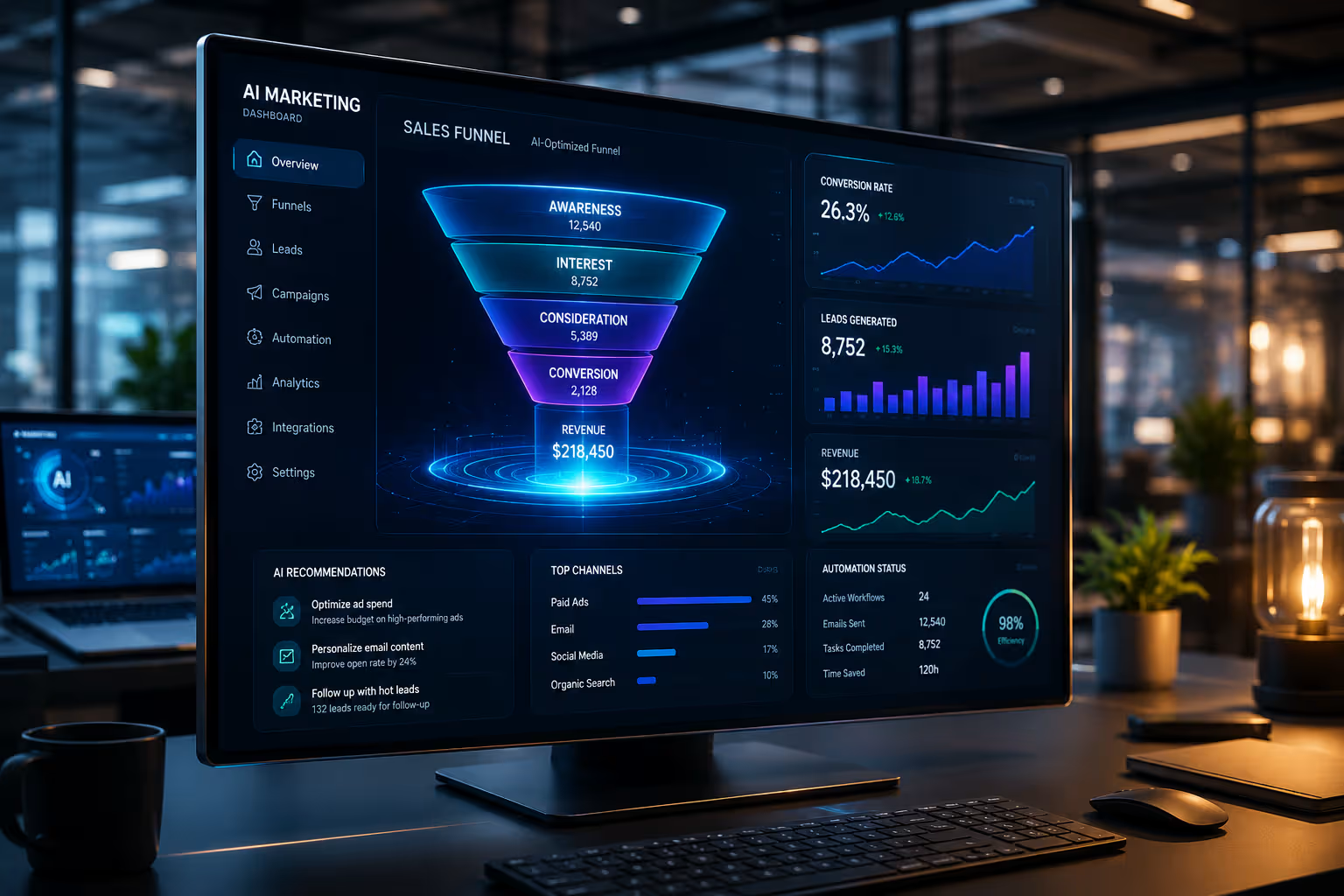
Understand how customers move from:
- Awareness
- Interest
- Consideration
- Purchase
- Retention
AI works best when the journey is clearly defined.
Test and Optimize
AI funnels improve through testing.
Track:
- Click-through rates
- Conversion rates
- Bounce rates
- Open rates
Continuous optimization leads to stronger results over time.
Why AI Funnels Will Dominate Digital Marketing
The future of marketing is automated, personalized, and predictive.
Consumers now expect businesses to understand their needs instantly.
AI funnels make this possible at scale.
In 2026, companies using AI-driven funnels are gaining major advantages through:
- Faster customer acquisition
- Better personalization
- Higher conversion rates
- Lower operational costs
Businesses that fail to adopt AI automation may struggle to compete.
Final Thoughts
Understanding how AI funnels work is no longer optional for modern businesses.
AI funnels are transforming digital marketing by combining:
- Automation
- Personalization
- Predictive analytics
- Smart customer journeys
The result is a marketing system that works smarter, faster, and more efficiently than traditional funnels.
Whether you run an ecommerce brand, SaaS company, agency, or local business, AI funnels can help you scale growth while improving customer experiences.
The future of marketing is already here — and AI funnels are leading the way.