Marketing automation has been around for years. But the introduction of artificial intelligence (AI) has completely transformed how businesses attract, engage, and convert customers.
Traditional marketing automation follows rules.
AI marketing automation learns, predicts, and optimizes automatically.
Companies using AI-powered automation today are seeing higher engagement, better personalization, and significantly improved ROI.
In this guide, we will explore 12 real AI marketing automation examples that show how businesses are using AI to grow faster and smarter.
Why AI Marketing Automation Is Transforming Modern Marketing
Modern customers expect personalized experiences.
They want brands to:
-
Understand their preferences
-
Deliver relevant recommendations
-
Communicate at the right time
-
Provide fast responses
Doing this manually is nearly impossible.
This is where AI marketing automation becomes powerful.
AI can analyze massive amounts of customer data and automatically optimize campaigns in real time.
Businesses using AI marketing automation often experience:
-
Higher conversion rates
-
Improved customer retention
-
Better marketing efficiency
-
Stronger ROI from campaigns
What Is AI Marketing Automation?
AI marketing automation refers to using artificial intelligence to automate marketing processes, decision-making, and campaign optimization.
Unlike traditional automation, AI systems can:
-
Analyze behavior patterns
-
Predict customer intent
-
Personalize experiences
-
Optimize campaigns automatically
For example, AI can automatically determine:
-
Which email subject line will perform best
-
Which product a customer is most likely to buy
-
When a customer is likely to leave
This allows marketers to make data-driven decisions instantly.
12 Real AI Marketing Automation Examples That Generated Massive ROI
Below are some of the most impactful AI marketing automation examples used by successful businesses today.
1. AI-Powered Customer Segmentation
Traditional segmentation divides audiences into basic groups like age or location.
AI segmentation goes much deeper.
AI tools analyze:
-
browsing behavior
-
purchase history
-
engagement patterns
-
demographics
This allows businesses to create micro-segments of highly targeted audiences.
Example:
An e-commerce store used AI segmentation to identify customers interested in premium products.
The result:
37% increase in conversion rate.
2. Predictive Lead Scoring
Not every lead is ready to buy.
AI lead scoring predicts which prospects are most likely to convert.
AI analyzes:
-
website activity
-
email engagement
-
social interactions
-
previous purchases
Sales teams can then focus on high-value prospects first.
Companies using predictive lead scoring report:
-
up to 30% higher sales efficiency
3. AI Email Personalization Campaigns
Email marketing becomes far more powerful when AI personalizes messages automatically.
AI can customize:
-
subject lines
-
product recommendations
-
sending time
-
email content
Example:
An online retailer used AI to personalize email offers.
Results:
-
41% increase in open rate
-
28% increase in sales
4. AI Chatbots for Lead Generation
AI chatbots are one of the fastest-growing marketing automation tools.
Modern AI chatbots can:
-
answer customer questions instantly
-
recommend products
-
capture leads
-
schedule appointments
Example:
A SaaS company added AI chatbot support to its website.
Within 3 months:
-
55% more qualified leads
5. Predictive Product Recommendations
You see this strategy on platforms like Amazon.
AI analyzes customer behavior and recommends products customers are likely to buy.
These recommendations appear in:
-
product pages
-
emails
-
homepages
-
ads
Businesses using AI product recommendations often see:
20–35% increase in average order value.
6. Automated Social Media Content Scheduling
Managing multiple social media accounts manually can be overwhelming.
AI tools now automate:
-
content scheduling
-
hashtag optimization
-
post timing
-
engagement analysis
AI predicts when audiences are most active and schedules posts automatically.
This improves:
-
engagement
-
reach
-
visibility
7. AI-Driven Ad Optimization
Running digital ads manually requires constant monitoring.
AI tools automatically optimize ads by adjusting:
-
targeting
-
bidding
-
creatives
-
placements
For example, AI can automatically pause underperforming ads and scale successful ones.
Companies using AI ad optimization have reported:
up to 40% lower advertising costs.
8. Smart Customer Journey Automation
AI can map the entire customer journey and trigger actions automatically.
For example:
If a visitor downloads a guide, AI can trigger:
-
follow-up email
-
product recommendation
-
retargeting ad
This creates a seamless automated funnel.
9. AI Content Generation for Campaigns
Creating marketing content consistently is time-consuming.
AI tools can generate:
-
blog ideas
-
ad copy
-
email content
-
product descriptions
This helps marketing teams scale campaigns quickly.
AI content tools are now widely used by:
-
startups
-
agencies
-
SaaS companies
10. Predictive Churn Detection
Customer retention is often cheaper than acquiring new customers.
AI can detect customers likely to leave by analyzing:
-
activity drops
-
support tickets
-
purchase behavior
Businesses can then trigger retention campaigns automatically.
Example:
A subscription platform used AI churn prediction.
Results:
18% reduction in churn rate.
11. AI Dynamic Pricing Strategy
AI can automatically adjust product prices based on:
-
demand
-
competition
-
customer behavior
This strategy is widely used by:
-
airlines
-
hotels
-
e-commerce brands
Dynamic pricing helps businesses maximize profit without manual analysis.
12. AI Marketing Analytics & Insights
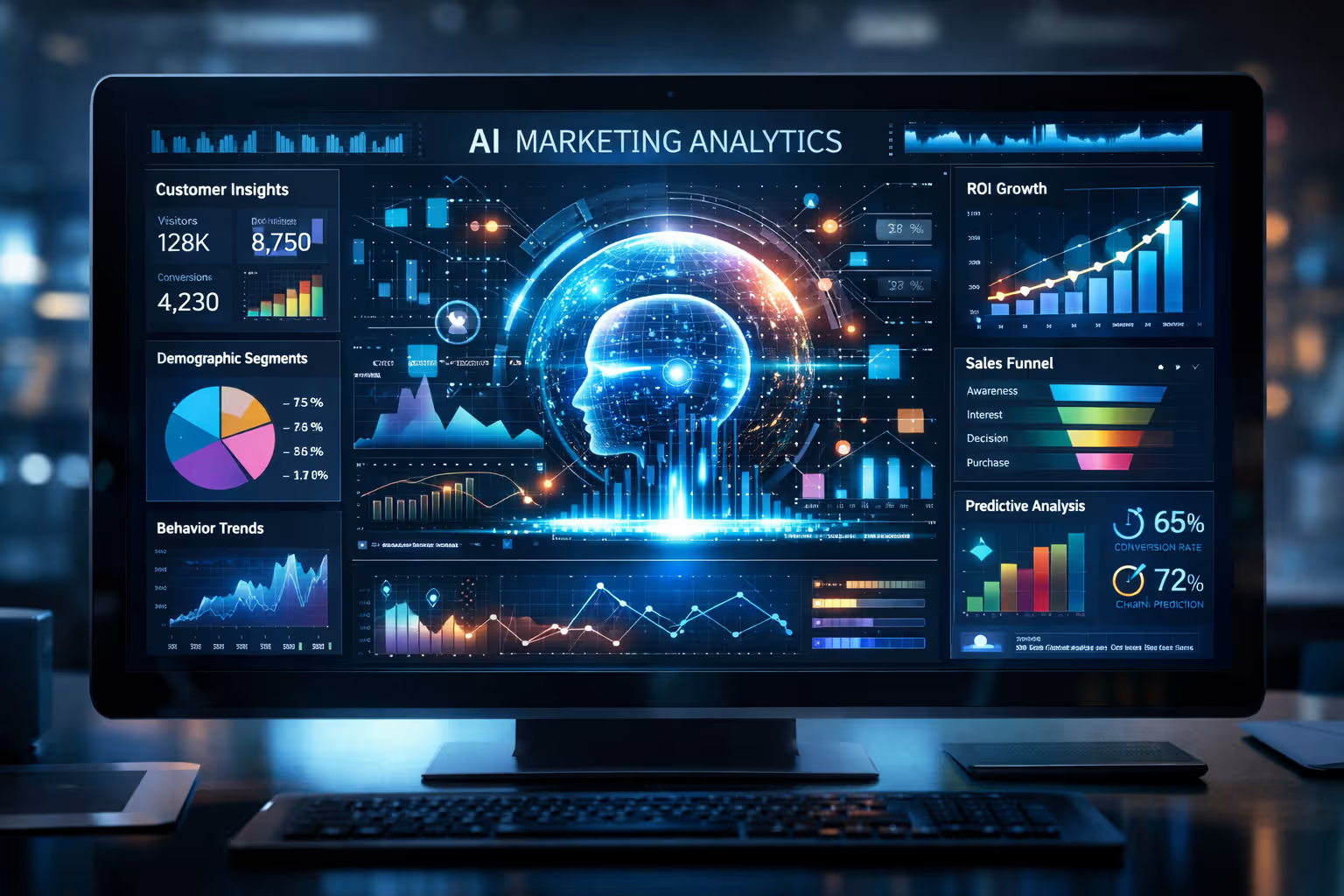
Analytics tools transform raw marketing data into actionable insights.
AI can instantly identify:
-
top-performing campaigns
-
high-value customers
-
conversion bottlenecks
Instead of spending hours analyzing reports, marketers receive real-time insights automatically.
Key Benefits of AI Marketing Automation
Businesses implementing AI marketing automation experience multiple benefits.
Increased Efficiency
AI handles repetitive marketing tasks automatically.
Better Personalization
Customers receive highly relevant messages.
Improved ROI
Campaigns become more optimized and effective.
Faster Decision Making
AI provides instant insights from data.
How Businesses Can Implement AI Marketing Automation
Businesses can start using AI marketing automation by following these steps:
-
Identify repetitive marketing tasks
-
Choose AI marketing automation tools
-
Integrate customer data sources
-
Automate campaign workflows
-
Continuously optimize campaigns
Platforms like SailoAI help businesses automate marketing processes efficiently.
Future of AI Marketing Automation
AI marketing automation is evolving rapidly.
Future advancements will include:
-
hyper-personalized marketing
-
predictive customer journeys
-
fully automated campaigns
-
AI-generated creative content
Businesses that adopt AI early will gain a major competitive advantage.
Final Thoughts
AI marketing automation is no longer optional.
It is becoming essential for businesses that want to scale marketing efficiently.
The AI marketing automation examples discussed in this guide demonstrate how AI can dramatically improve:
-
campaign performance
-
customer engagement
-
marketing ROI
Companies that embrace AI today will lead the next generation of marketing innovation.