
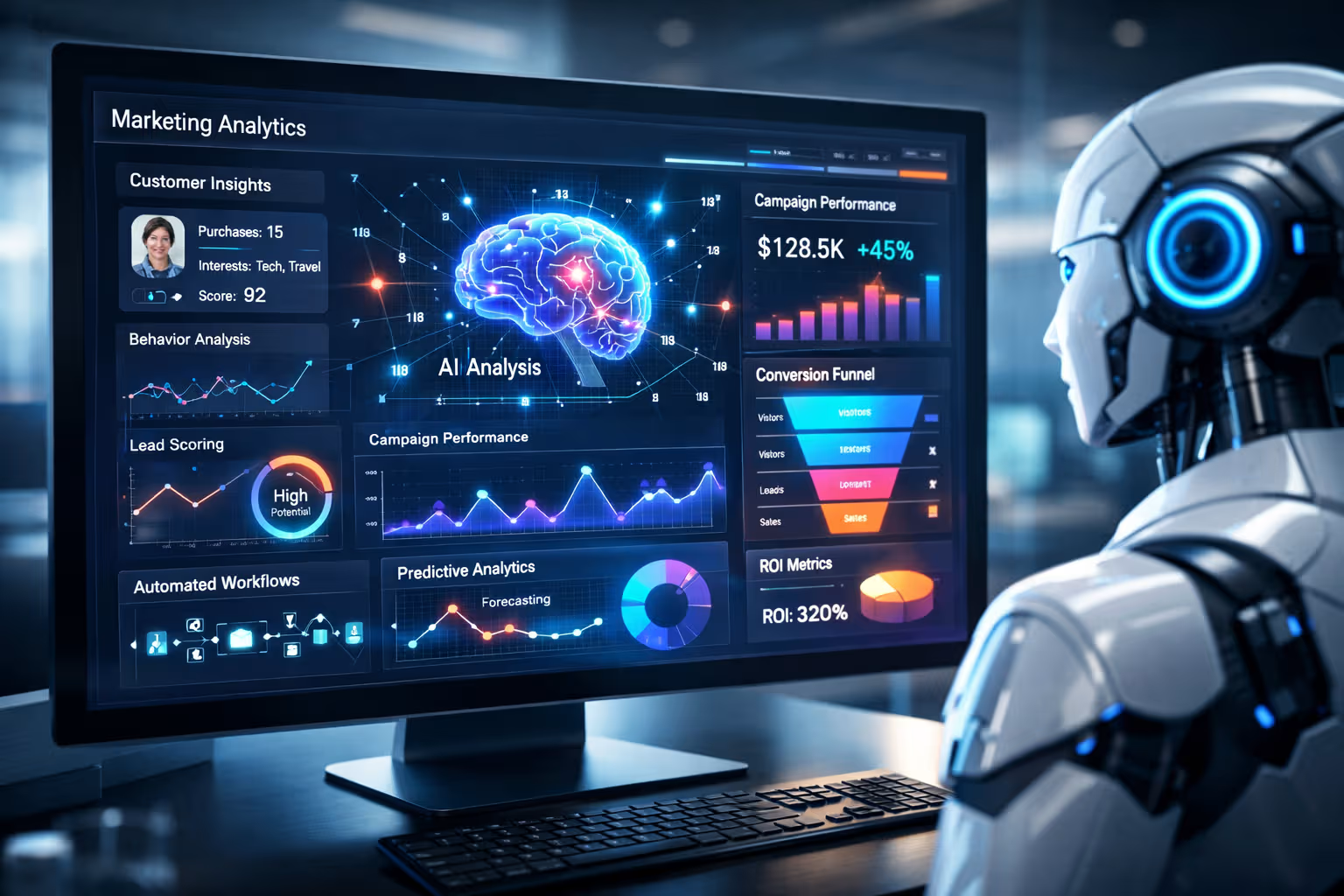
Marketing automation has transformed the way businesses interact with customers. From automated emails to scheduled campaigns, automation tools have helped marketers save time and scale their outreach.
But in recent years, a new evolution has emerged: AI marketing automation.
Businesses now face a major decision:
Should they rely on traditional marketing automation systems or shift toward AI-powered marketing automation?
In this guide, we’ll explore the differences between AI vs traditional marketing automation, how they impact sales, and which one is better for modern businesses.
The Evolution of Marketing Automation
Traditional marketing automation began as a way to simplify repetitive tasks such as:
-
Email campaigns
-
Lead nurturing
-
Customer segmentation
-
Social media scheduling
These tools helped marketers automate workflows and reduce manual work.
However, traditional automation has one major limitation: it relies heavily on fixed rules.
AI marketing automation changes the game by introducing machine learning, predictive analytics, and behavioral insights.
Instead of following predefined rules, AI systems learn from data and optimize campaigns automatically.
What Is Traditional Marketing Automation?
Traditional marketing automation refers to rule-based systems designed to automate repetitive marketing tasks.
These tools operate using if-this-then-that logic.
Example:
-
If a user downloads an ebook → send email series
-
If a user clicks email → send product offer
-
If a user abandons cart → trigger reminder email
These workflows are built manually and remain static unless marketers update them.
Key Features of Traditional Automation
-
Scheduled email campaigns
-
Basic lead scoring
-
Static customer journeys
-
Manual campaign optimization
-
Predefined segmentation
Examples of Traditional Automation Tools
-
Email drip campaign tools
-
CRM based automation
-
newsletter automation platforms
While these systems improve efficiency, they often struggle with dynamic customer behavior.
What Is AI Marketing Automation?
AI marketing automation takes automation to a completely different level.
Instead of relying on fixed rules, AI systems analyze massive amounts of data to predict customer behavior and automatically optimize marketing campaigns.
These systems use technologies such as:
-
Machine learning
-
predictive analytics
-
behavioral data analysis
-
natural language processing
Key Capabilities of AI Marketing Automation
-
Real-time personalization
-
Predictive lead scoring
-
Intelligent campaign optimization
-
Customer behavior prediction
-
Automated decision making
AI tools continuously analyze performance and adjust strategies automatically.
For businesses, this means better targeting and higher conversion rates.
AI vs Traditional Marketing Automation: Key Differences
Understanding the difference between AI vs traditional marketing automation helps businesses choose the right solution.
1. Data Processing
Traditional automation analyzes limited data points.
AI automation analyzes large behavioral datasets including:
-
browsing activity
-
purchase patterns
-
engagement behavior
-
demographics
This allows AI systems to make smarter marketing decisions.
2. Personalization
Traditional systems personalize marketing using basic segmentation.
Example segments:
-
new subscribers
-
existing customers
-
inactive users
AI marketing automation goes much deeper.
It can personalize messaging based on:
-
real-time behavior
-
user intent
-
past interactions
-
predicted future actions
This creates hyper-personalized marketing experiences.
3. Campaign Optimization
Traditional automation requires manual testing.
Marketers must run A/B tests, analyze results, and adjust campaigns.
AI systems do this automatically.
They continuously analyze:
-
open rates
-
click rates
-
conversion rates
-
engagement signals
Then optimize campaigns instantly.
4. Customer Journey Intelligence
Traditional automation uses predefined journeys.
AI creates dynamic journeys.
For example:
If a customer shows strong purchase intent, AI may skip multiple nurture steps and move them directly to an offer.
This reduces friction and increases sales.
How AI Marketing Automation Drives More Sales
Businesses are increasingly adopting AI marketing tools because they directly impact revenue.
Here are the biggest reasons why.
Hyper-Personalized Messaging
Consumers today expect personalization.
AI systems can personalize marketing based on:
-
browsing history
-
purchase behavior
-
interaction timing
-
content preferences
Instead of sending generic campaigns, AI sends the right message to the right person at the right time.
This dramatically increases engagement.
Predictive Lead Scoring
Traditional lead scoring is manual and static.
AI uses predictive algorithms to analyze thousands of data points and determine which leads are most likely to convert.
Sales teams can focus on high-intent prospects, improving efficiency and closing more deals.
Real-Time Campaign Optimization
Traditional automation reacts slowly.
AI systems optimize campaigns in real time.
For example:
If a campaign performs poorly, AI can automatically adjust:
-
subject lines
-
send times
-
audience segments
-
messaging strategy
This continuous optimization significantly improves ROI.
Limitations of Traditional Marketing Automation
Despite its benefits, traditional automation has several limitations.
Static Workflows
Workflows remain fixed unless manually updated.
Limited Personalization
Most personalization relies on simple segmentation.
Manual Campaign Optimization
Marketers must continuously analyze performance and adjust campaigns.
As customer expectations grow, these limitations become more noticeable.
Real-World Example: AI vs Traditional Automation
Imagine two companies launching a marketing campaign.
Company A — Traditional Automation
They create:
-
email sequence
-
fixed workflow
-
predefined segmentation
Every customer receives similar messaging.
Company B — AI Marketing Automation
Their AI platform analyzes:
-
browsing patterns
-
engagement behavior
-
purchase signals
Customers receive personalized messages tailored to their behavior.
Result:
Company B experiences higher conversions and stronger engagement.
When Traditional Marketing Automation Still Works
Despite AI’s advantages, traditional automation still has value in some situations.
It works well for:
-
small businesses with simple workflows
-
basic email marketing
-
startups with limited data
However, as companies grow, AI systems become far more powerful.
Why Businesses Are Moving to AI Marketing Automation
Several trends are driving the shift toward AI.
1. Customer Expectations
Modern consumers expect personalized experiences.
2. Data Explosion
Businesses collect massive amounts of customer data.
AI helps analyze and use this data effectively.
3. Competitive Advantage
Companies using AI marketing tools often outperform competitors relying on traditional automation.
The Future of Marketing Automation
The future of marketing will be AI-first.
We are already seeing trends like:
-
AI generated marketing content
-
predictive customer journeys
-
intelligent campaign optimization
-
automated decision making
In the coming years, AI will become the standard foundation for marketing automation platforms.
Conclusion: AI vs Traditional Marketing Automation
The comparison between AI vs traditional marketing automation reveals a clear trend.
Traditional automation helped businesses scale marketing tasks.
But AI marketing automation goes much further by enabling:
-
smarter decision making
-
real-time personalization
-
predictive marketing strategies
-
automated campaign optimization
For businesses focused on growth, AI is quickly becoming the most powerful marketing tool available.