
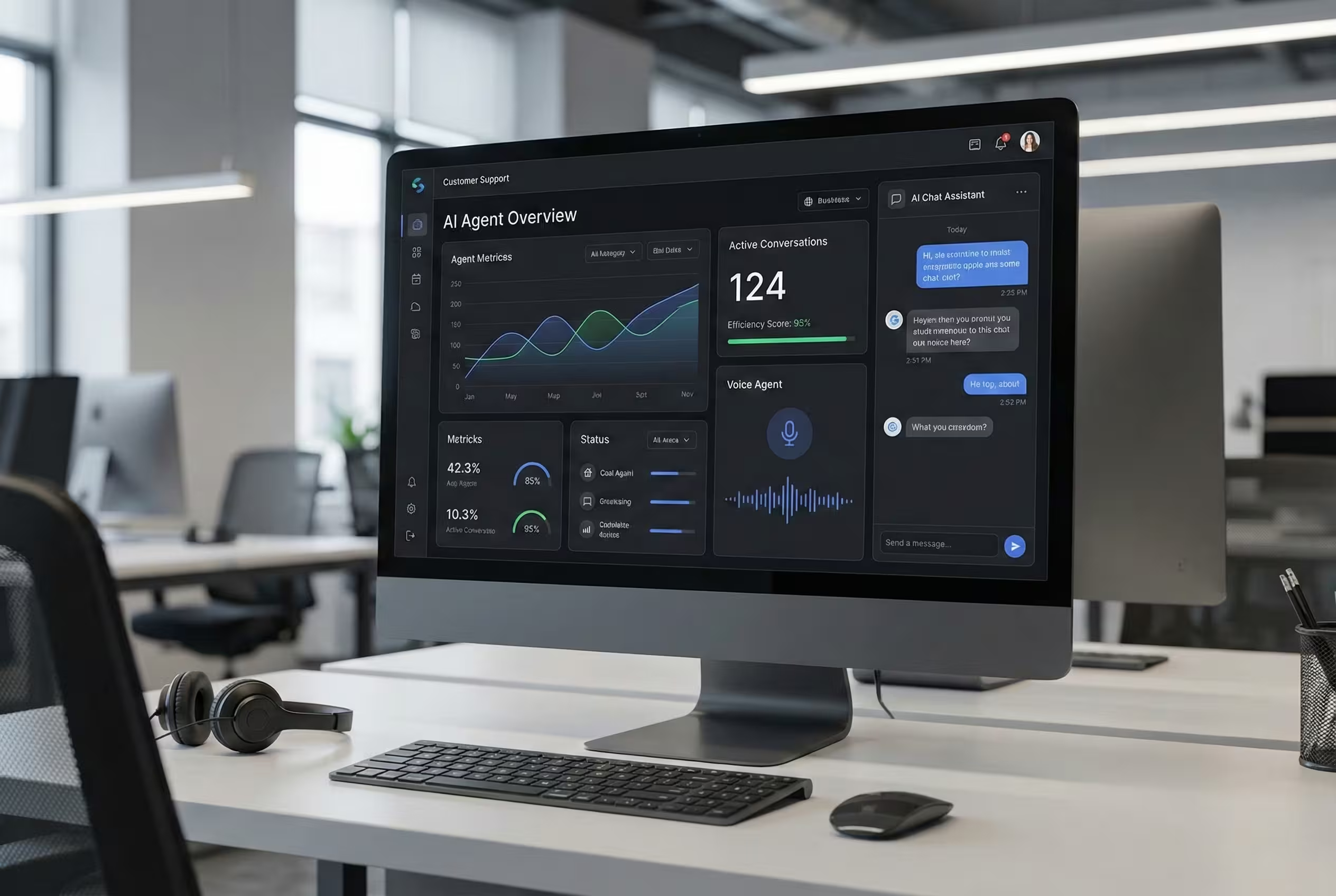
For decades, call centers were the backbone of customer support. If customers had a problem, they called a number, waited on hold, and spoke to an agent—eventually.
That model no longer fits how modern businesses operate.
Customers now expect instant responses, 24/7 availability, and consistent service across channels. Traditional call centers struggle to meet these expectations at scale.
That’s why conversational AI for business is rapidly replacing call centers—and companies that move early are gaining a serious competitive edge.
The Call Center Model Is Breaking Down
Traditional call centers are expensive, slow to scale, and increasingly frustrating for customers.
Common problems include:
-
Long wait times during peak hours
-
High employee turnover and training costs
-
Limited availability outside business hours
-
Inconsistent answers between agents
-
Rising operational expenses
As customer volumes increase, businesses face a choice: hire more agents or automate intelligently.
Most are choosing automation—specifically conversational AI.
What Is Conversational AI for Business?
Conversational AI for business refers to AI-powered systems that can understand, process, and respond to human conversations across text and voice channels.
Unlike basic chatbots, conversational AI can:
-
Understand intent, not just keywords
-
Hold multi-step conversations
-
Learn from past interactions
-
Integrate with CRMs, helpdesks, and databases
-
Communicate via chat, WhatsApp, voice, web, and more
How Conversational AI Works
At its core, conversational AI combines:
-
Natural Language Processing (NLP) to understand what users say
-
Machine Learning to improve responses over time
-
Intent Detection to identify what the customer wants
-
Context Awareness to keep conversations flowing naturally
Chatbots vs Conversational AI
| Feature | Basic Chatbot | Conversational AI |
|---|---|---|
| Predefined scripts | ✅ | ❌ |
| Understands intent | ❌ | ✅ |
| Handles complex queries | ❌ | ✅ |
| Learns over time | ❌ | ✅ |
| Human-like conversations | ❌ | ✅ |
Why Businesses Are Replacing Call Centers With Conversational AI
1. 24/7 Availability Without Hiring More Agents
Conversational AI never sleeps.
Customers can get support at midnight, on weekends, or during holidays—without adding shifts or overtime costs.
2. Lower Costs, Higher Efficiency
Call centers are expensive to run. Conversational AI can handle thousands of conversations simultaneously at a fraction of the cost.
Businesses typically see:
-
Reduced cost per conversation
-
Lower staffing requirements
-
Faster onboarding than human agents
3. Faster Resolution Times
AI doesn’t put customers on hold.
It instantly answers FAQs, checks order status, resets passwords, and routes complex cases to humans only when needed.
4. Consistent Customer Experience
Human agents vary. AI doesn’t.
Conversational AI delivers consistent, brand-aligned responses every time—across every channel.
Conversational AI vs Traditional Call Centers
| Area | Call Centers | Conversational AI |
|---|---|---|
| Availability | Limited hours | 24/7 |
| Scalability | Slow & expensive | Instant |
| Cost | High recurring | Predictable & lower |
| Response speed | Depends on queue | Instant |
| Consistency | Agent-dependent | Uniform |
| Analytics | Limited | Deep insights |
Real Business Use Cases of Conversational AI
Customer Support
-
Answer FAQs
-
Troubleshoot issues
-
Handle returns & refunds
-
Provide order updates
Sales & Lead Qualification
-
Qualify inbound leads
-
Answer product questions
-
Book demos automatically
-
Route hot leads to sales teams
Appointment Booking
-
Schedule, reschedule, and cancel appointments
-
Send reminders
-
Sync with calendars
Post-Sales Support
-
Onboarding guidance
-
Renewal reminders
-
Feedback collection
Is Conversational AI Replacing Humans Completely?
No—and that’s a good thing.
Conversational AI augments human teams rather than replaces them.
AI handles:
-
Repetitive questions
-
High-volume inquiries
-
Simple workflows
Humans focus on:
-
Complex problem-solving
-
Emotional conversations
-
High-value customers
The result? Happier agents and better customer experiences.
How Conversational AI Improves Customer Experience
Customers don’t care if support is human or AI—they care about speed and accuracy.
Conversational AI improves CX by:
-
Reducing wait times to zero
-
Providing instant, accurate answers
-
Supporting customers on their preferred channels
-
Offering personalized responses based on history
What to Look for in a Conversational AI Platform
Not all platforms are created equal. Look for:
-
Multi-channel support (chat + voice + messaging apps)
-
Easy no-code setup
-
CRM and helpdesk integrations
-
Advanced analytics & conversation logs
-
Seamless human handoff
Why Conversational AI for Business Is the Future
Call centers aren’t disappearing—but their role is shrinking.
Conversational AI is becoming the first line of communication, handling most interactions before humans step in.
Businesses that adopt conversational AI now will:
-
Reduce operational costs
-
Scale faster
-
Deliver superior customer experiences
-
Stay competitive in an AI-first world
Frequently Asked Questions
Is conversational AI expensive?
No. Most businesses save money compared to traditional call centers.
Can conversational AI handle voice calls?
Yes. Modern platforms support AI voice agents and phone calls.
Is it hard to implement?
Most platforms allow deployment in days—not months.
Final Thoughts: Should Your Business Switch Now?
If your support team is overwhelmed, costs are rising, or customers expect faster responses—the answer is yes.
Conversational AI for business is no longer optional. It’s the new standard.